Yes — if you’re replacing heating or cooling in Sonoma County, you can often combine a local utility incentive, a statewide program, and a federal tax credit to take a real bite out of a heat pump’s price. The catch is that the programs change, the amounts depend on your equipment and household income, and a few of them can’t be combined. Here’s how the major Sonoma County heat pump rebates work, and how to line them up before you sign anything.
This is an Act guide — it assumes you’re close to a decision. If you’re still deciding whether a heat pump is right for you, start with furnace vs. heat pump in Northern California; if you want a baseline before you map incentives onto it, see what a heat pump costs in Sonoma County. Then come back here to fund it.
What heat pump rebates can Sonoma County homeowners actually get?
There are three buckets to think about: a local utility incentive, a statewide/regional program, and a federal tax credit. Most North Bay heat pump projects draw from at least two.
| Program | What it covers | Typical range |
|---|---|---|
| Sonoma Clean Power (SCP) | Heat pump HVAC and heat pump water heaters for SCP customers | Up to ~50% of project cost (often cited around $5,000–$10,000) [CONFIRM: verify current Sonoma Clean Power / BayREN / TECH Clean California amounts] |
| Clean HEET | Income-qualified and standard electrification incentives | ~$3,000–$10,500 [CONFIRM: verify current Clean HEET amounts and eligibility] |
| TECH Clean California / BayREN | Statewide + regional heat pump rebates via participating contractors | Varies by measure [CONFIRM: verify current TECH Clean California / BayREN amounts] |
| Federal 25C tax credit | 30% of qualifying heat pump cost, annual cap | Up to ~$2,000/year [CONFIRM: verify current federal 25C heat pump credit cap and eligibility] |
A few plain-language notes:
- Sonoma Clean Power is the local Community Choice Aggregator for most of the county. Its programs target all-electric upgrades and frequently carry the largest single incentive — but eligibility and amounts shift, so treat any figure as
[CONFIRM]until confirmed at the time you apply. - Clean HEET and TECH Clean California are designed to be claimed through a participating contractor, not after the fact by the homeowner.
- The federal 25C credit is a tax credit, not an upfront discount — you claim it when you file, and it’s capped per year, which matters if you’re also replacing a water heater or panel.
When does it make sense to stack rebates?
Stacking — combining more than one program on one project — makes the most sense when you’re replacing an aging AC or furnace anyway and willing to go all-electric with a properly sized heat pump. The incremental cost of “heat pump instead of like-for-like” is exactly what these incentives are meant to close.
It’s also worth stacking when:
- You’re moving off propane or an old gas furnace and a dual-fuel (hybrid) system or full heat pump is on the table.
- You have an older Sonoma County home where a ductless mini-split avoids costly new ductwork — many programs cover ductless heat pumps too.
- Your equipment meets the program’s SEER2 / HSPF2 efficiency thresholds (high-efficiency tiers usually unlock the bigger numbers).
Not everything combines, though. Some local and statewide programs draw from the same funding pool and won’t double-pay for the same measure. A participating contractor confirms the current stacking rules before you commit.
Where heat pump rebate claims go wrong
Most lost rebates aren’t lost because the homeowner didn’t qualify — they’re lost on process. The recurring failure modes:
- Applying after the install when pre-approval was required. Several programs need the project enrolled before work starts. Buy first, lose the rebate.
- Equipment that misses the efficiency tier. If the rebate requires a specific SEER2 (cooling) or HSPF2 (heating) rating and the installed unit is a tier below, the claim is denied.
- Using a contractor who isn’t enrolled. TECH Clean California and similar programs pay through participating contractors — a non-enrolled installer can’t file the claim at all.
- Missing income documentation on income-qualified tiers like portions of Clean HEET.
- Electrical panel surprises. An all-electric heat pump can require a panel evaluation; budgeting for that up front keeps the project (and any panel-related incentive) on track.
What we see on North Bay rebate projects
In our experience across Sonoma, Marin, and Napa Counties, the homeowners who capture the most don’t chase rebates — they pick the right equipment for the house first, then we map every program that fits onto that design. That order matters: a rebate should never push you into the wrong-sized or wrong-type system.
We also keep the paperwork honest. Because amounts and rules change, we confirm current figures at the time of your estimate rather than quoting last season’s numbers — which is why every dollar figure on this page is flagged [CONFIRM] until we verify it for your specific project and the equipment we’d actually install (we install Trane central systems and Mitsubishi Electric ductless, and recommend what fits the home and qualifies for the incentive).
How to claim your Sonoma County heat pump rebates
Here’s the simple path:
- Get the system designed right. A load-appropriate heat pump (ducted or ductless) that meets the efficiency tiers.
- Map the incentives to that design — SCP, Clean HEET, TECH/BayREN, and the federal 25C credit — and confirm which actually stack this season.
- Enroll before install wherever pre-approval is required.
- Pair it with financing if you want to spread the out-of-pocket balance after incentives, and protect the new system with maintenance plans so it keeps qualifying for warranty coverage.
Want a quick estimate first? Our free heat-pump rebate estimator ballparks the incentives you may be able to stack before anyone visits. Want it done for you? Start with a free second opinion — we’ll size the system, pull the current rebate picture for your address, and put it in writing. You can also browse our HVAC services, check the North Bay areas we serve, or contact our team directly. When you’re ready to keep researching, head back to the Learning Center. You can also reach our Rohnert Park office at (707) 795-7219, Monday–Friday, 7AM–4PM.
Frequently asked questions
Can I combine a Sonoma Clean Power rebate with the federal tax credit?
Often, yes — a local utility incentive (an upfront discount) and the federal 25C credit (claimed at tax time) target different stages, so they frequently apply to the same project. What doesn’t always combine is two programs that draw from the same funding pool for the same measure. We confirm the current stacking rules for your exact project before you commit, and treat published amounts as [CONFIRM] until verified.
Do heat pump rebates require a specific efficiency rating?
Usually. Most programs tie their larger incentives to high-efficiency tiers measured by SEER2 (cooling) and HSPF2 (heating). If a unit lands one tier below the threshold, the rebate can be reduced or denied — which is why we match equipment to the rebate requirements during design, not after install.
Will a heat pump even work in the North Bay climate?
Yes. North Bay winters are mild compared with much of the country, which is exactly the climate where heat pumps shine. For colder snaps, a dual-fuel (hybrid) setup keeps a backup heat source. We cover the trade-offs in detail in furnace vs. heat pump in Northern California.
How long do heat pump rebates take to pay out?
It varies by program. Utility and statewide rebates processed through a participating contractor are typically applied as a discount or paid within weeks to a few months after the paperwork clears; the federal 25C credit is realized when you file your taxes for that year. Timelines change, so we confirm the current expectation for each program at the time of your estimate.
Reviewed by: Chris Street
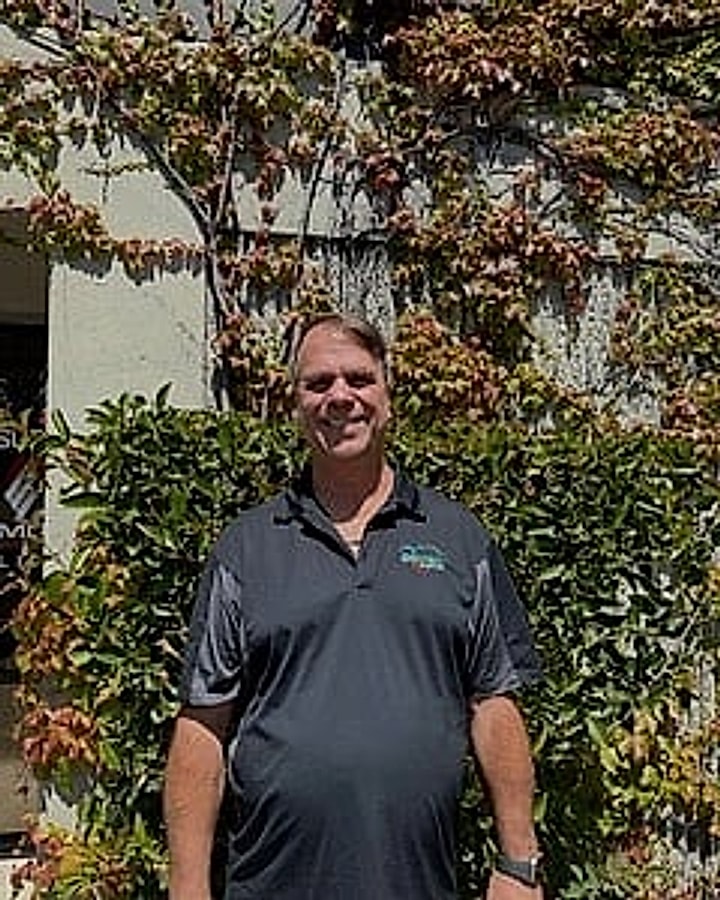
Author: Chris Street · Co-Owner & Comfort Specialist
Chris Street brings 32 years of hands-on HVAC experience to every Enviro project. He co-owns Enviro Heating & Air Conditioning with his wife, Lori — a true family business, with five of their children working alongside them. Founded in 2008 and based in Rohnert Park, the NATE-certified, Diamond Certified team (California CSLB #928565) is built on honesty, reliability, and community, delivering energy-efficient comfort and top-tier workmanship across Sonoma, Marin, and Napa Counties.
Published: · Last updated: